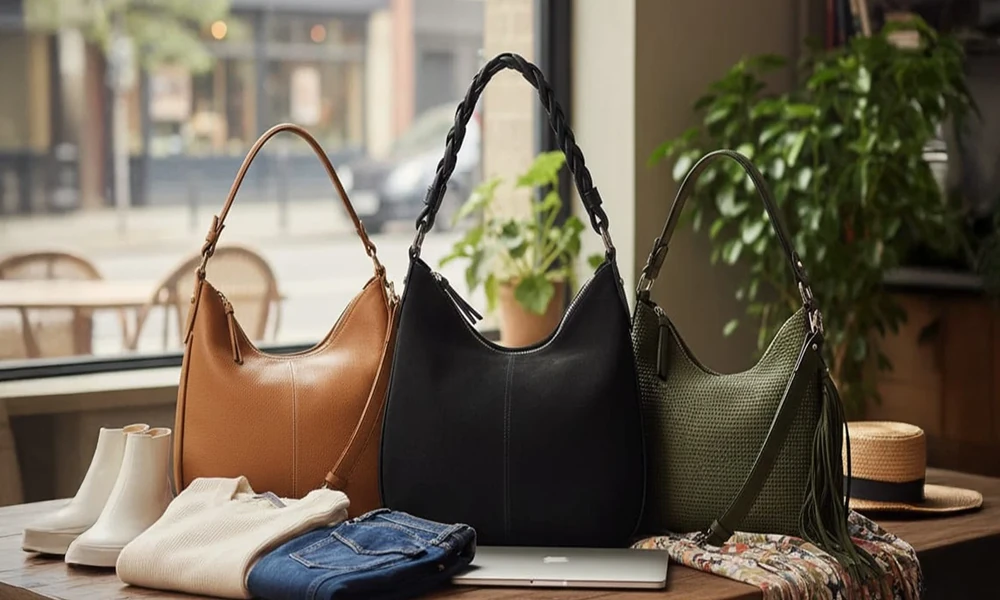



An everyday accessory earns attention through useful design choices. A hobo bag offers softness, room, and adaptable carrying without looking overly formal. Its curved profile settles naturally against different clothing shapes. That quality helps the accessory move between casual errands and smarter occasions. Material, colour, handle design, and interior space also influence styling. Together, these details create a practical option for wardrobes that change throughout the day.
Soft Construction Supports Relaxed Styling
A soft body gives this accessory an easy visual character. Rather than holding a strict shape, flexible material follows natural movement. This creates a smoother connection with different clothing proportions. Loose layers can look balanced beside curved edges. Fitted outfits gain a softer counterpoint from the relaxed profile. The result feels considered without demanding careful outfit planning.
Roomy Interiors Suit Changing Daily Needs
Capacity becomes useful when daily plans involve different belongings. A wider opening allows quick access without constant rearranging. Interior pockets can separate smaller objects from larger essentials. That arrangement keeps frequently used items easier to locate. It also allows the same accessory to handle different routines.
Several practical details contribute to that flexibility:
- A broad opening allows quicker access during busy routines.
- Separate sections keep smaller belongings easier to find.
- Flexible sides accommodate different amounts of personal items.
- Adjustable straps support varied carrying positions throughout outings.
- Lightweight construction keeps the overall load manageable.
The value comes from adapting without becoming cumbersome. A useful interior should support movement rather than create extra effort.
Material Choices Influence Everyday Appearance
Material selection changes both appearance and handling. Supple leather creates a polished finish while maintaining natural movement. Fabric versions can feel lighter and more relaxed. Smooth surfaces support refined outfits, while textured finishes introduce stronger visual interest. A hobo bag gains broader styling value when material complements different clothing choices.
Can Strap Design Affect Outfit Balance?
Strap placement changes more than carrying comfort. It also affects where the accessory rests against clothing. A longer strap creates a lower, relaxed position beside the body. Shorter handles bring the shape closer toward the torso. Adjustable designs provide another option when clothing layers change.
Useful strap features include:
- Wider straps can distribute pressure more comfortably.
- Adjustable lengths support different carrying preferences.
- Strong attachments help maintain reliable everyday handling.
- Short handles create a closer polished appearance.
For layered clothing, this flexibility becomes particularly useful. The same design can sit differently without changing the overall outfit direction.
Colour Makes Repeated Styling Easier
Colour can determine how frequently an accessory enters daily rotation. Neutral shades coordinate with a broad range of clothing choices. Deeper tones provide contrast when surrounding pieces remain understated. Softer shades can support lighter outfits without creating visual competition.
Still, colour alone does not determine versatility. Hardware, surface texture, and shape influence the final appearance too. A restrained finish often allows the curved profile to remain noticeable without becoming distracting.
Everyday Details Give The Design Purpose
The strongest styling choices often begin with function. A roomy interior supports changing belongings during busy routines. Soft material allows natural movement beside different clothing shapes. Adjustable straps provide another layer of carrying flexibility.
These details create a useful relationship between appearance and purpose. Instead of treating styling as separate from function, the design connects both naturally. A curved body can carry essentials while also softening an outfit. That simple balance explains why this accessory remains relevant.
The most useful wardrobe pieces rarely demand attention. Their value becomes clearer through repeated use. When a design works with changing clothes, belongings, and carrying preferences, everyday styling becomes less complicated. The accessory earns its place through that steady usefulness.
A Shape Built Around Real Routines
The curved opening shows why practical details matter. Quick access becomes easier without sacrificing a relaxed silhouette. At the same time, adjustable carrying options support changing clothing layers. That balance gives the design relevance beyond seasonal styling. A useful accessory does not need constant reinvention when its structure already responds to everyday movement.